
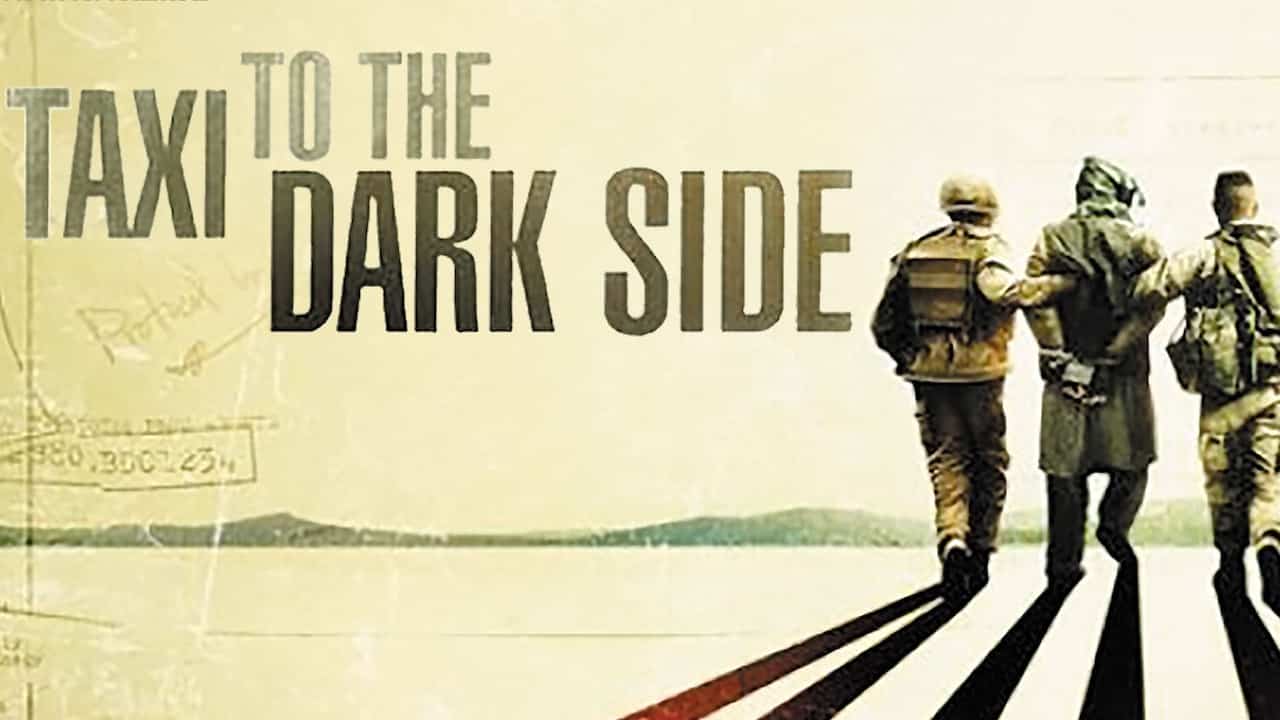
Taxi To The Dark Side (Trailer)
Taxi to the Dark Side explores the United States’ use of torture and focuses on the case of an innocent Afghan man who was beaten to death by American soldiers while being held in a detention facility.
In the winter of 2002, a poor Afghan man named Dilawar managed to save enough money to buy a taxi. In December that year, he was arrested along with three of his passengers at a military checkpoint on suspicion of terrorism. They had driven past a military base that had been attacked by rockets that morning. A paid informant claimed that Dilawar was involved in the attack. The four men were handed over to American troops and imprisoned at the Bagram Theatre Internment Facility. Five days later, Dilawar was dead, and his autopsy indicated that he had been subjected to severe torture. His legs were so badly beaten that they would have required amputation had he survived, and the chaining of his wrists to the ceiling had dislocated his arms from their sockets. It later emerged that the paid informant was, in fact, the perpetrator of the crime of which Dilawar had been accused.
An official report released to the press claimed that Dilawar had died of natural causes. However, The New York Times investigated further and uncovered an autopsy report that ruled the death a homicide. Following an investigation, a small number of soldiers were held responsible for the killing, but, as in previous torture cases, no senior officers were charged. Even if these crimes took place without the knowledge of senior officials, they are, at the very least, guilty of dereliction of duty.
Taxi to the Dark Side documents the Bush administration’s sanctioning of torture against suspects, despite it being forbidden under US constitutional, military and international law, charting the path to Guantánamo Bay and Abu Ghraib. Despite Pentagon officials’ claims that the brutal treatment of prisoners was the work of a few rogue soldiers, there is evidence that horrifying practices such as waterboarding and other methods were approved at the highest levels. The intended effect of these methods — to break down psychological defences — is discussed in interviews with behavioural scientists, interrogators and their victims. Filmmaker Alex Gibney’s father, who was a prison interrogator during the Second World War, explains that torture is ineffective because victims will say whatever interrogators want to hear in order to stop the punishment, and that acting on such information is foolish.
The film contains candid interviews with American soldiers, including some who were court-martialled for Dilawar’s death, a former prisoner at Bagram, senior officials who challenge the direction of policy, and the New York Times journalists who broke the story of Dilawar’s torture. Although some of the servicemen were involved in horrific acts, they are portrayed with a degree of sympathy as junior soldiers who were assigned tasks for which they were untrained, led to believe they were fulfilling their duty, and ultimately sacrificed as scapegoats.